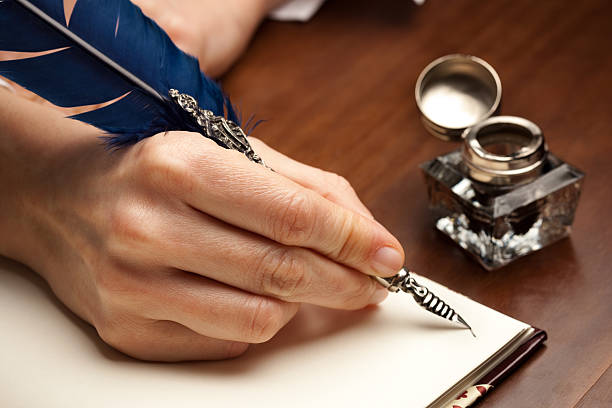
This statement defines how I write, why I write, and what I believe writing must do.
Core Claim: What My Writing Is and Why It Matters
My writing forces the recognition of truths most people already know but avoid naming. The aesthetic value of my writing is making people think and challenging assumptions via the use of wordplay, alliteration, and other time-proven rhetorical devices such as irony, contrast, repetition, metaphor, analogy, etc.
Good writing creates ah-ha experiences. My writing does this by speaking the unspoken. It challenges, informs, and educates. I accept a concept I encountered in the 1960s, “Did it make you feel something?” If the answer is yes, it has some aesthetic weight.
My audience is able to accurately describe my point of view, values, and what I consider beautiful and unbecoming. Using Heaney’s own words, “Finding a voice means that you can get your own feeling into your own words and that your words have the feel of you about them . . . for a poetic voice is probably very intimately connected with the poet’s natural voice, the voice that he hears as the ideal speaker of the lines he is making up” (Heaney 3).
Craft vs. Technique
Regarding this, Heaney writes, “I think technique is different from craft. Craft is what you can learn from other verse. Craft is the skill of making. It can be deployed without reference to the feelings or the self. Learning the craft is learning to turn the windlass at the well of poetry (Heaney 6).” Heaney goes on to say,
Technique, as I would define it, involves not only a poet’s way with words . . . involves also a definition of his stance towards life, a definition of his own reality. Technique entails the watermarking of your essential patterns of perception, voice and thought into the touch and texture of your lines; it is that whole creative effort of the mind’s and body’s resources to bring the meaning of experience within the jurisdiction of form. (Heaney 7)
An example from my poem, Riding the Tiger (of time): The jungle snarls with creatures sharrrp and deadly and I think… / …the trajectory of it all falls, falls, falling / like liquid, spilling and making grit out of ancient rocks (Brando, “Riding the Tiger of Time”). The warped spelling and rhythm express an unstable mind and how time breaks things down. I am not just describing, I am showing a way of seeing a world where everything slips, decays, and cannot be stabilized.
Voice: How I Sound on the Page
My “voice” is how I sound on the page – direct, candid, controlled. I use short sentences to avoid ambiguity. My tone is honest and unsentimental, even as I write about nostalgic things and events. I write with restraint and not excess. I love rhythm and like repetition to give the lines weight. When I use humor, it is sometimes dry and subtle and does not distract. The intensity emerges from what I say and not from exaggerations.
My influences include the songwriters of the 1960s, particularly Bob Dylan, Gordon Lightfoot, Lennon-McCartney as well as the authors of the American Songbook such as Cole Porter, Johnny Mercer, Rogers and Hart, and Irving Berlin.
An example from my own work, the same poem as above, and what makes it mine. And then the sun goes down and the rain pours . . . with a quarter-cup of vanilla almond milk in hot black coffee and cubes like sugar stirrrred in the swirl of my tripping mind.” What makes this mine is the mix of the ordinary and the distorted. I move from something simple, coffee, to something unstable, the mind I describe. The words I stretch slow the line and give it a restless feel. The voice remains direct, but the perception is unbalanced. This combination is what gives my writing its “voice.”
Memory, Place, and Material
The subjects I often return to in my work include my childhood and teen years because I am nostalgic and find the past somewhat sweeter than the present. Back then I was young, strong, healthy, and had close friends that I saw nearly every day who understood and embraced me, physically, mentally, and emotionally.
My writing digs into lived experience by returning to moments that have stayed with me. I press into them to see what emerges. I draw from memory to uncover how those remembered events shaped me. I use concrete details, place, objects, and small actions to ground those moments . . . making them feel real and lived and not abstract. I stay close to what actually happened and how it felt to take the writing beyond memory and into meaning.
Here’s an example where I describe my best friend’s (Glenn’s) basement where we spent a great deal of time: Torn fishnet strewn across whitewashed walls Ensnares sun-bleached driftwood Viridescent wine bottles Coated in paraffin tears Candelabra candles, Wept blue and white Obscuring the black of the night (Brando, “Driftwood and Fishnet”)
Responsibility and Pressure (Personal, Cultural, Historical)
Ernest Hemingway said to “write one true sentence,” and this idea or goal guides my work. I focus on getting the truth right, even when it’s uncomfortable or simple. A writer should not hide behind style or avoid what’s real. A writer has a responsibility to say things clearly and cleanly, without distortion, and let the truth stand on its own.
I sometimes approach subjects indirectly via image, distortion and fragmentation. This sometimes helps me to show instead of tell. Some things are too complex or raw to state directly. This keeps my writing honest to how the experience actually feels and not cleaned up or simplified. Jesus sometimes spoke in parables which allowed His words to be interpreted based on the ability of the hearer to discern. In other words, the same words went quite deep and profound for some but shallower and more superficial for others.
A quote from my writing that deals with a form of pressure (conflict, grief, injustice, silence, violence, shame, power). Once again, from my ‘tiger’ poem: My heart, broken so many times it would take / a thousand needles to stitch me up again…(Brando, “Riding the Tiger of Time).
Conclusion: Where I Am Going Next
Currently I am working on getting better at compression and precision. I want to say more with less. I want all bone and muscle and no fat. Each word in each sentence should be strong and carry weight, with no filler. I want stronger endings, conclusions that do not fade.
What am I chasing? The clarity found in truth, saying what is real without softening it or dressing it up. The deeper question is how to put experience into words without diminishment of force or creating distortion and muddiness. I want to stay honest to how things feel while shaping them into language that lasts.
I am working toward greater precision and truth, line by line.
 Ty Brando, writer/editor